
Retaining Wall Repair
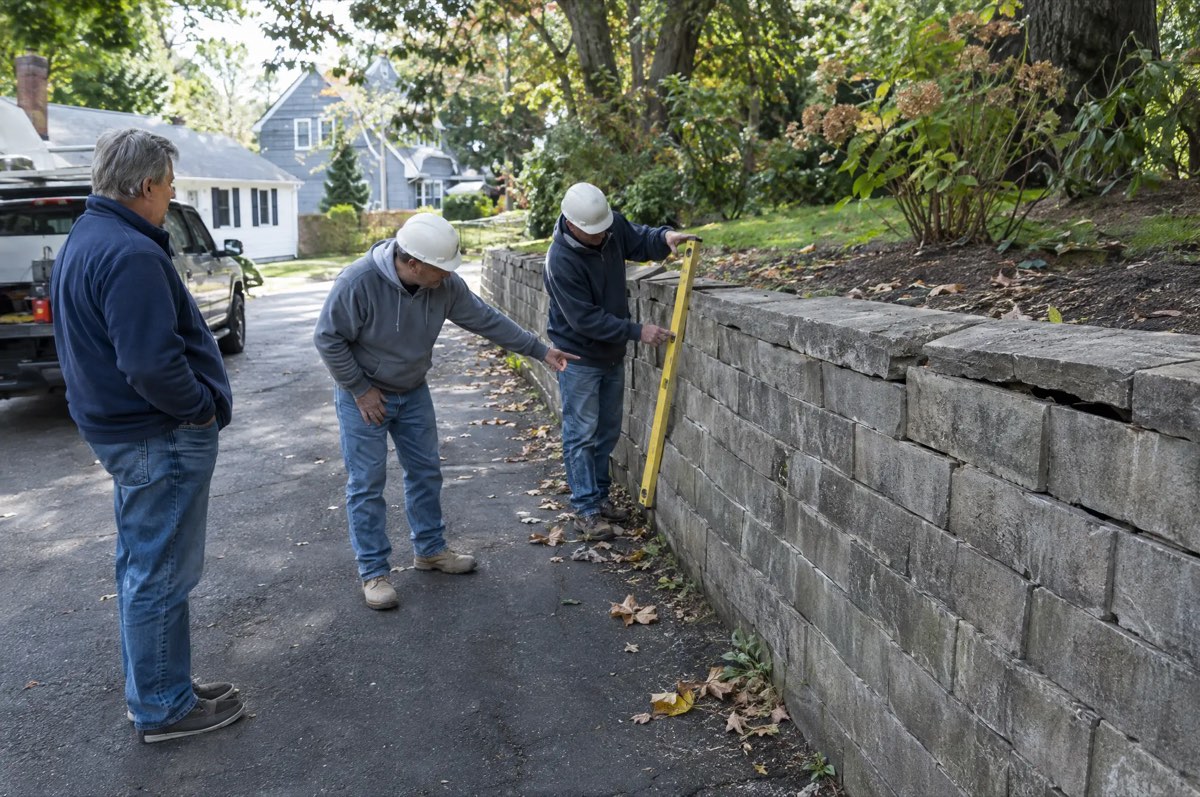
A retaining wall holds back a slope, and the soil behind it pushes on the wall every day. In Taunton, where winters swing between freezing and thawing again and again...
Learn more about retaining wall repair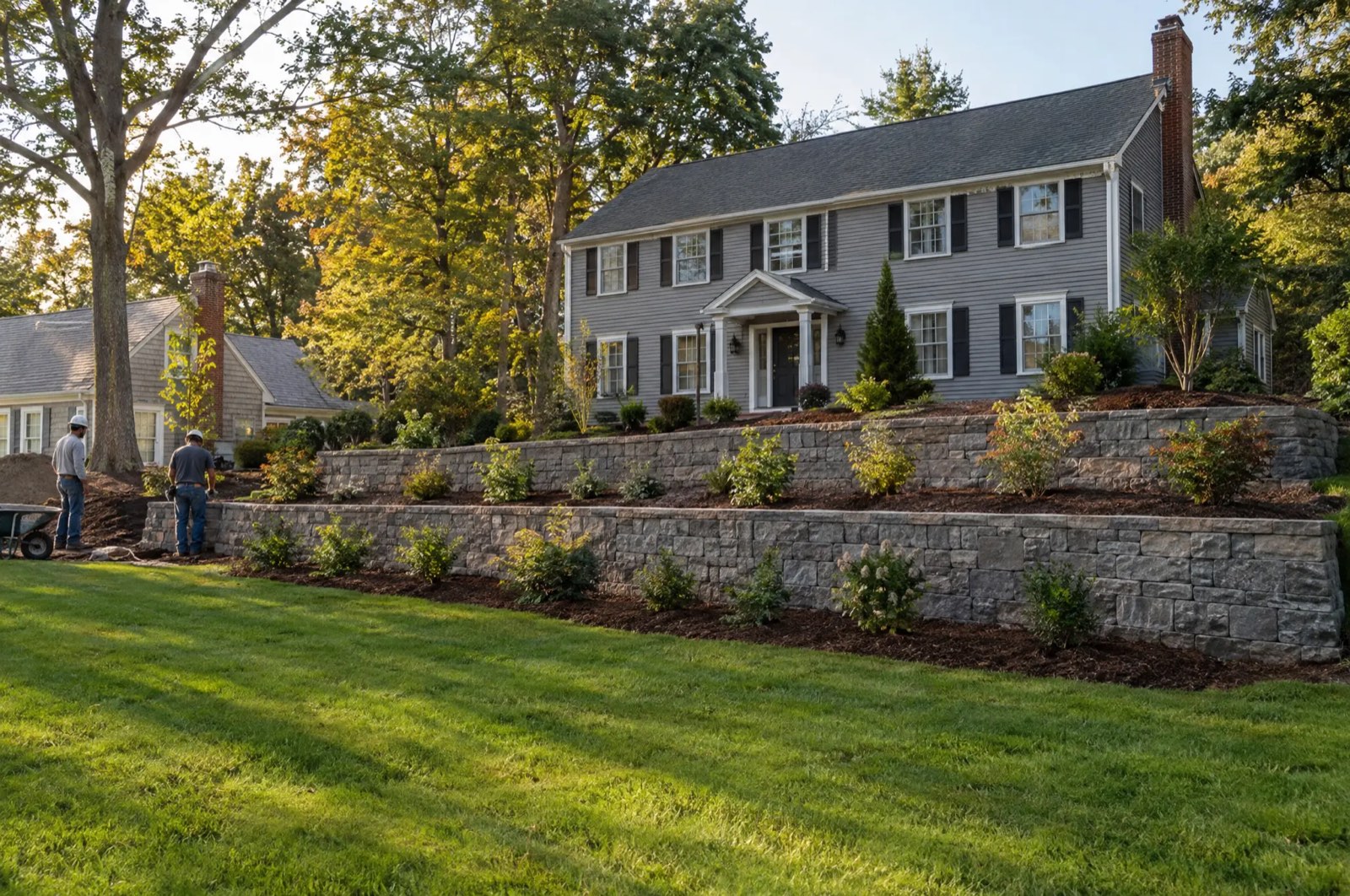
Taunton retaining wall contractor
Repairs, new walls, full replacements, and drainage fixes for yards around Taunton and nearby towns.
Get Your Free Retaining Wall Contractor Estimate
Takes about 60 seconds. We'll call you back.
About the Work
A retaining wall holds back soil, and New England weather tests it every year. Freeze and thaw cycles and heavy rain push on a wall from behind, and a wall with no way to shed water gets weaker each season.
Taunton Retaining Walls handles wall work around Taunton, MA. That covers repairs on leaning or cracked walls, new installations, full replacements, drainage fixes, and yard grading and leveling.
Plenty of Bristol County yards have a grade change somewhere, and some older streets have walls built decades ago with little drainage behind them. A contractor who checks the water first and the wall face second tends to find why a wall is moving. Call to talk through what you're seeing in your yard.
What We Handle
A retaining wall holds back a slope, and the soil behind it pushes on the wall every day. In Taunton, where winters swing between freezing and thawing again and again...
Learn more about retaining wall repair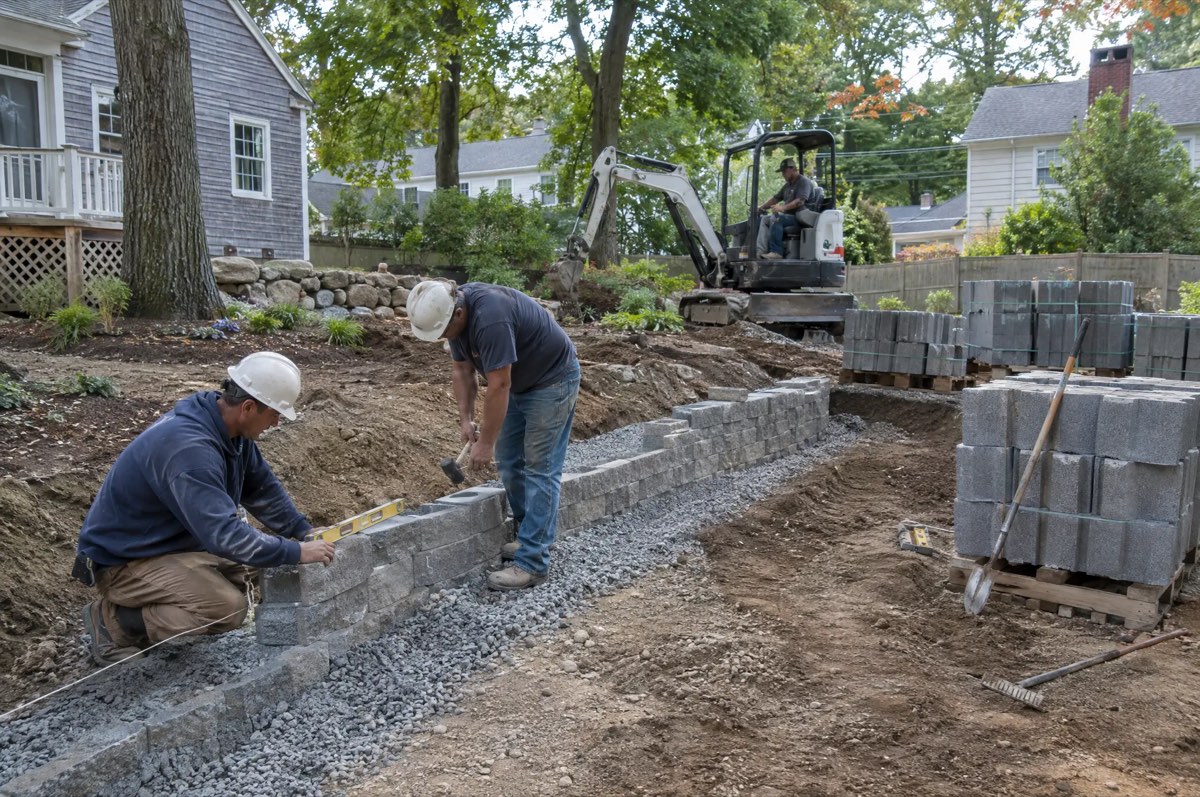
A new retaining wall earns its keep on any yard with a grade change, such as a sloped backyard or a driveway cut into a hillside. Taunton is in Bristol County, and many...
Learn more about retaining wall installation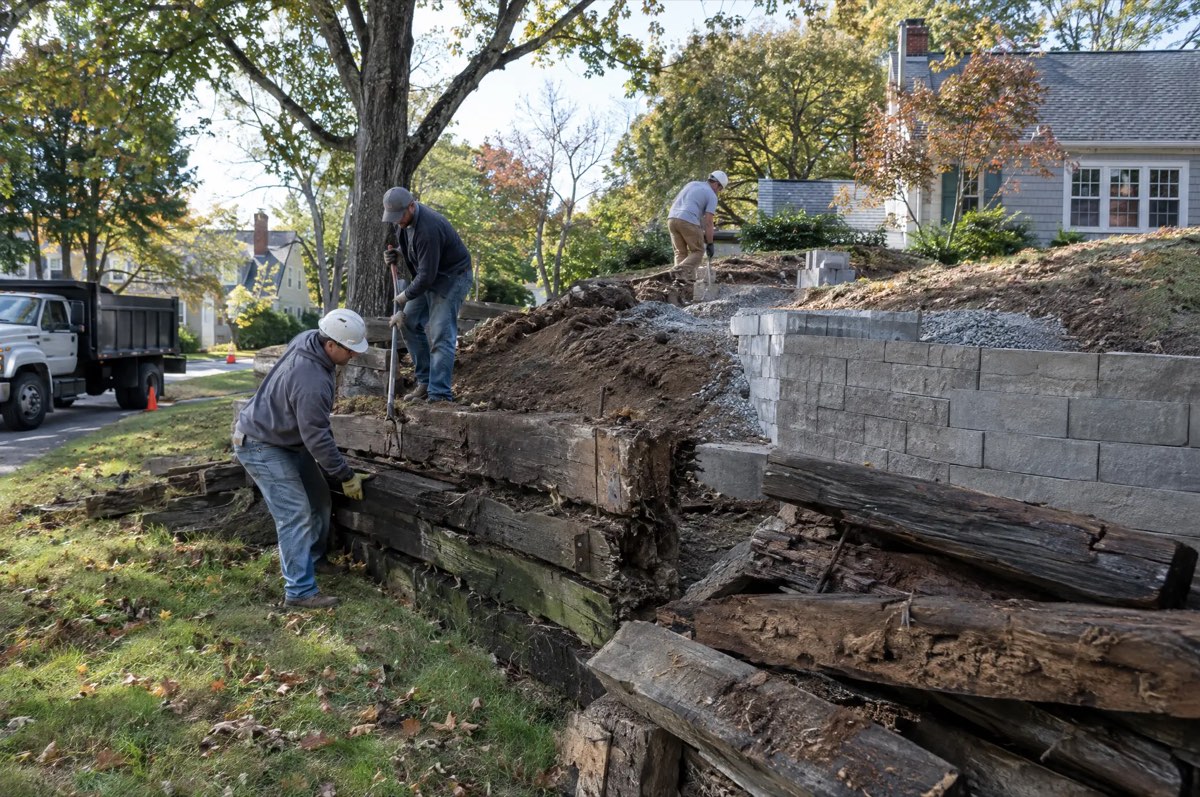
Some walls are past repair. When the face has rotated or the base has washed out, patching moves the failure a few feet down the wall. At that point replacing the whole...
Learn more about retaining wall replacement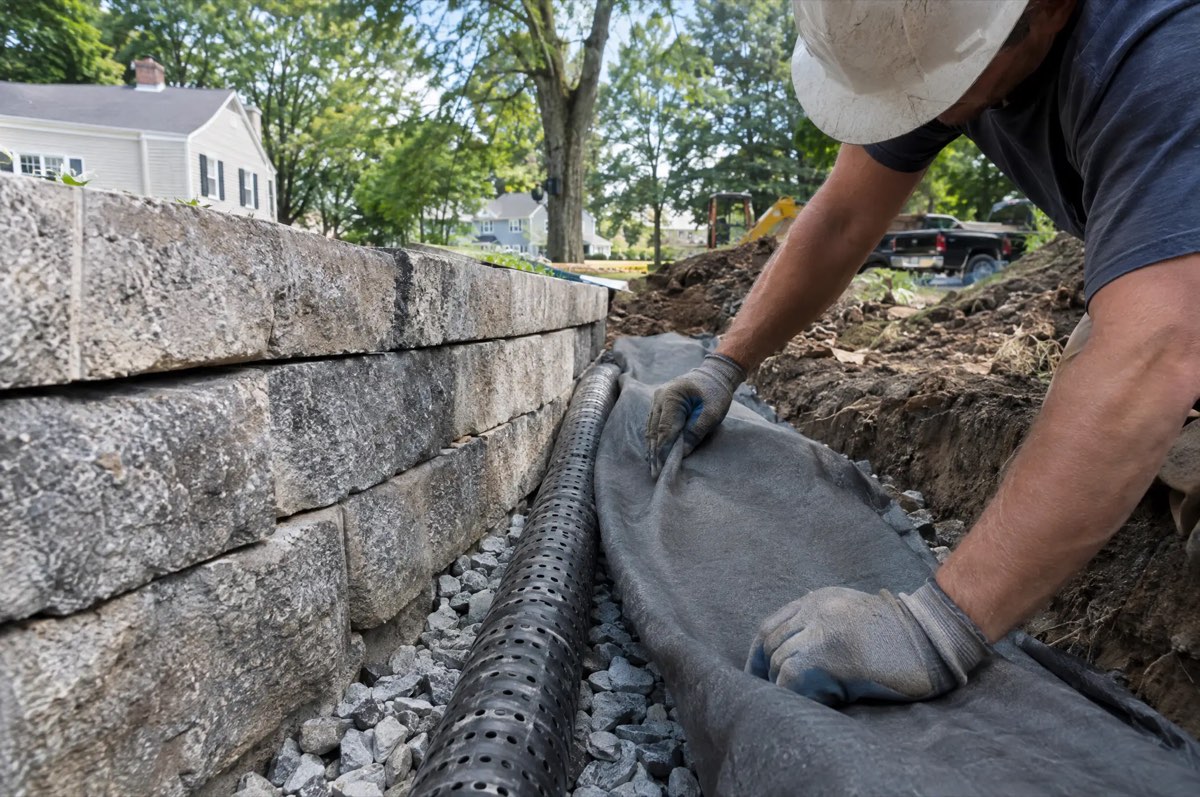
Water behind a retaining wall is what pushes it over. Wet soil is much heavier than dry soil, and it presses on the wall every season. A wall with no way to release that...
Learn more about retaining wall drainage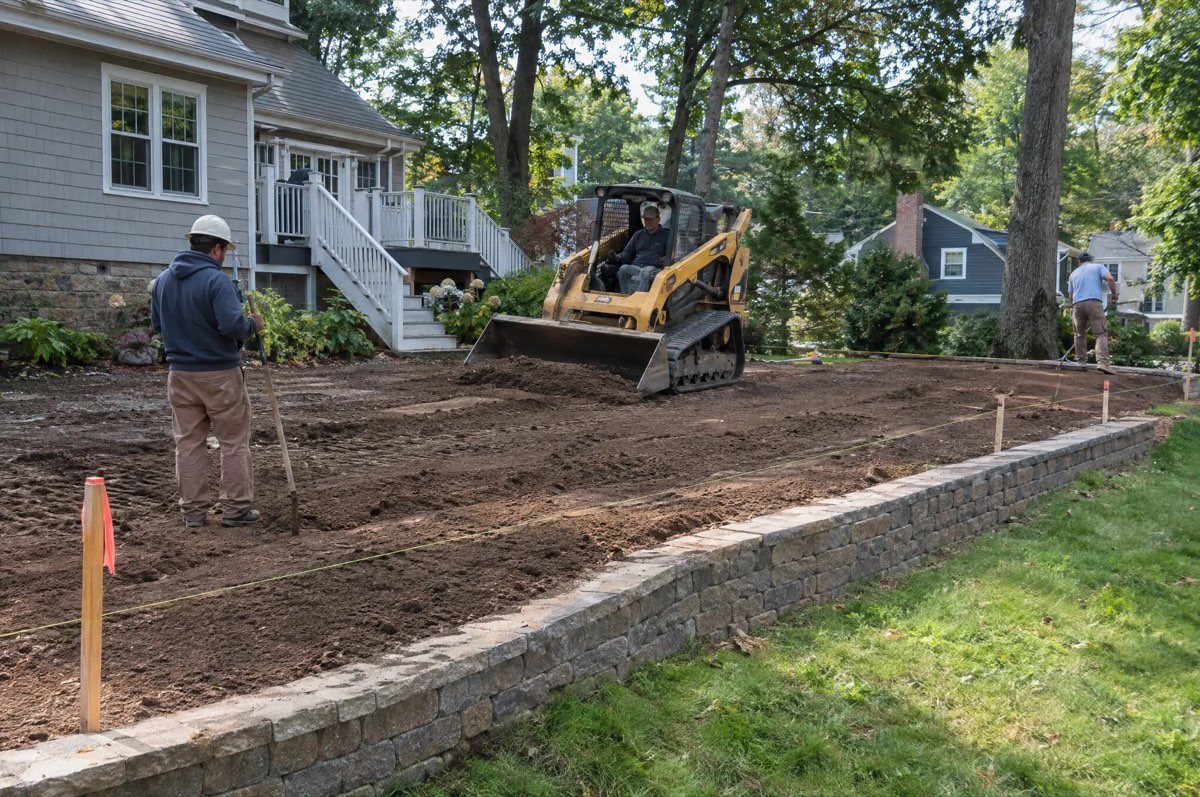
Water follows the slope of your yard. If the ground along your foundation is flat or tilts toward the house, rain and snowmelt end up against the walls and in any...
Learn more about yard grading and levelingWhy Homeowners Call
What you can expect when you call about retaining wall contractor in Taunton or the towns nearby.
Most wall failures trace back to water trapped behind the wall. A good contractor looks at the gravel backfill, the drain pipe, and where roof and yard runoff ends up before talking about the wall face.
A wall with a few loose blocks at the top is a different job than a wall bowing out at the middle. You should hear which one you have and what each option involves.
Frost pushes on a wall and heaves whatever sits on weak ground. A solid base, compacted stone, and proper backfill are what keep a wall straight through a New England winter.
Walls, drainage, and grading all affect each other. Handling them together keeps a new wall from sitting in a puddle or a fresh slope from washing out.
How It Works
Tell us where the wall is, how tall it is, and what you've noticed, like leaning, cracks, or soil washing out.
A site visit covers the wall, the ground above and below it, and how water moves across the yard.
You get a clear scope and quote that spell out whether the wall needs a repair, a rebuild, or drainage work.
The work goes in order. Excavation and a compacted base come first, then the wall goes up with drain pipe and stone behind it, and backfill and grading finish the job.
What to Look For
A retaining wall holds soil on a slope, and that soil never stops pushing. Water makes the push much heavier, which is why most wall trouble starts with moisture.
A few signs are cosmetic, and others mean the wall is moving.
A wall that tilts outward at the top or bellies out in the middle is being pushed by soil and water behind it. Hold a four-foot level against the face, or sight along the top edge. Even a slight lean is worth tracking with a photo every few weeks.
What it means: Tall walls, and walls that hold up a driveway or a building, can need an engineer's design. If yours fits that description, have a structural pro look at it before anyone starts patching.
Hairline cracks in poured concrete or mortared stone are common as a wall ages. Cracks wider than a pencil, stair-step cracks along the joints, and blocks sitting out of line point to movement. Mark the ends of a crack with a pencil and date it, then check again after a hard rain.
What it means: Dry-stacked stone and block walls show trouble as gaps between units. A gap that grows from month to month means the wall is still shifting.
White chalky streaks, damp patches, and muddy trails at the base mean water is soaking the soil behind the wall. Look at the weep holes, the small openings along the bottom of some walls. If they're packed with dirt, or dry during a week of rain, the drainage behind the wall may have failed.
What it means: Trapped water adds weight to the soil. In winter it freezes and expands, which pushes harder still.
A dip in the lawn behind the wall, a fence post that's started to tilt, or a walkway that's dropped an inch all suggest soil is settling or escaping. Pavers and patios above the wall tend to show it first.
What it means: Check the ground below the wall too. A fan of soil or small stone spilled at the base means material is leaving the slope with each rain.
Compare Your Options
The right fix depends on what's causing the trouble, and a fix that skips the cause tends to fail again. The four approaches below run from work that leaves the wall untouched to work that rebuilds it.
Local Conditions
Taunton sits in Bristol County in southeastern Massachusetts, where winter temperatures swing above and below freezing many times. Water in soil and joints freezes, expands, and pushes on a wall, then thaws and leaves a little more gap. Spring melt and heavy nor'easter rain add to the load.
Glaciers left the region a mix of sandy and stony soils, and many homes, including some on older streets, have walls of fieldstone or early block built before modern drainage was common. Lots that slope toward a street, a neighbor, or a river are familiar across New England, and each one asks its wall to hold back a different amount of soil.
The Cost of Waiting
A slight lean, a crack, or damp soil shows up at the wall.
Each freeze and thaw pushes the wall further out of line.
Soil washes out and the ground above the wall begins to sink.
A wall that leans a little this fall can lean much more after one winter of freezing and thawing. Each cycle gives the soil room to move forward, and the water behind the wall gets deeper.
A drainage fix or repair usually costs less than a rebuild, and a rebuild usually costs less than a rebuild plus a sunken patio and a damaged fence. Once soil starts leaving the slope, the problem grows quickly. A tall wall, or one that holds up a structure, deserves a structural pro's eyes soon.
Service Area
Before You Call
A good contractor will ask where the wall is, how tall it is, what it's made of, and roughly how old it is. Photos help a great deal, and a few taken after rain show where water pools and runs.
Expect a site visit before any firm quote, since a wall is hard to judge over the phone. Ask who designs and permits taller walls, and ask what's causing the problem as well as how it would be fixed.
Next Step
If you've spotted a lean, a crack, or water at the base of your wall, get it looked at before the next freeze. Taunton Retaining Walls can help you work out whether you need drainage, repair, a rebuild, or a new wall, and in what order. Call to describe what you're seeing and get a straight answer on the next step.
FAQ
Answers to common questions about retaining wall contractor.
Look for a lean, a bulge in the middle, horizontal cracks, or gaps opening between blocks or stones. Soil washing out at the base and water seeping through after rain are also warning signs. A wall that has moved once usually keeps moving, so it's worth having it checked early.
A wall with a few loose caps or one damaged section can often be repaired. A wall that's bowing, leaning as a whole, or sitting on a failed base generally needs to come down and be rebuilt. A good contractor will show you what's wrong and explain why one option fits better than the other.
Water in the soil behind the wall freezes and expands, and it pushes the wall outward. Over repeated freeze and thaw cycles, that pressure can tilt a wall that has weak drainage or a thin base. Fixing the drainage is often as important as fixing the wall.
Taller walls commonly need a permit and sometimes engineered plans, and walls near wetlands or a river can bring in the conservation commission. Rules differ from town to town. Check with the local building department before work starts, and a contractor can help you ask the right questions.
A typical setup uses clean crushed stone behind the wall, a perforated pipe at the base that carries water to an outlet, and fabric that keeps soil from clogging the stone. Some walls also have weep holes. Without a path for water, pressure builds up behind the wall every time it rains.
A leaning wall rarely fixes itself, and every wet season moves it a little further. Call Taunton Retaining Walls to get your wall looked at and a quote on what it needs.
Call (508) 209-5020