
Retaining Wall Installation for Taunton Yards
A new retaining wall earns its keep on any yard with a grade change, such as a sloped backyard or a driveway cut into a hillside. Taunton is in Bristol County, and many lots in the area have enough slope or soil pressure that a wall is the cleanest way to get flat, usable ground.
Retaining wall installation works best when it's planned around water and frost before anyone picks a material. A wall that looks great on day one still fails if the base is thin or rain has nowhere to go.
Signs You Need a New Retaining Wall
Some yards need a wall long before anything fails. Soil that washes onto a walkway after storms and a slope too steep to mow safely both point to a grade that needs holding back.
Projects like a new patio, a shed pad, a wider driveway, or a raised garden bed also tend to call for a wall once the ground has to be cut or filled by more than a foot or so. Building without one means the fill slumps and the cut face erodes.
A low spot at the foot of a slope that stays soggy is another clue. A wall with proper drainage can redirect that water and leave the yard drier and easier to use.
How a New Wall Gets Built
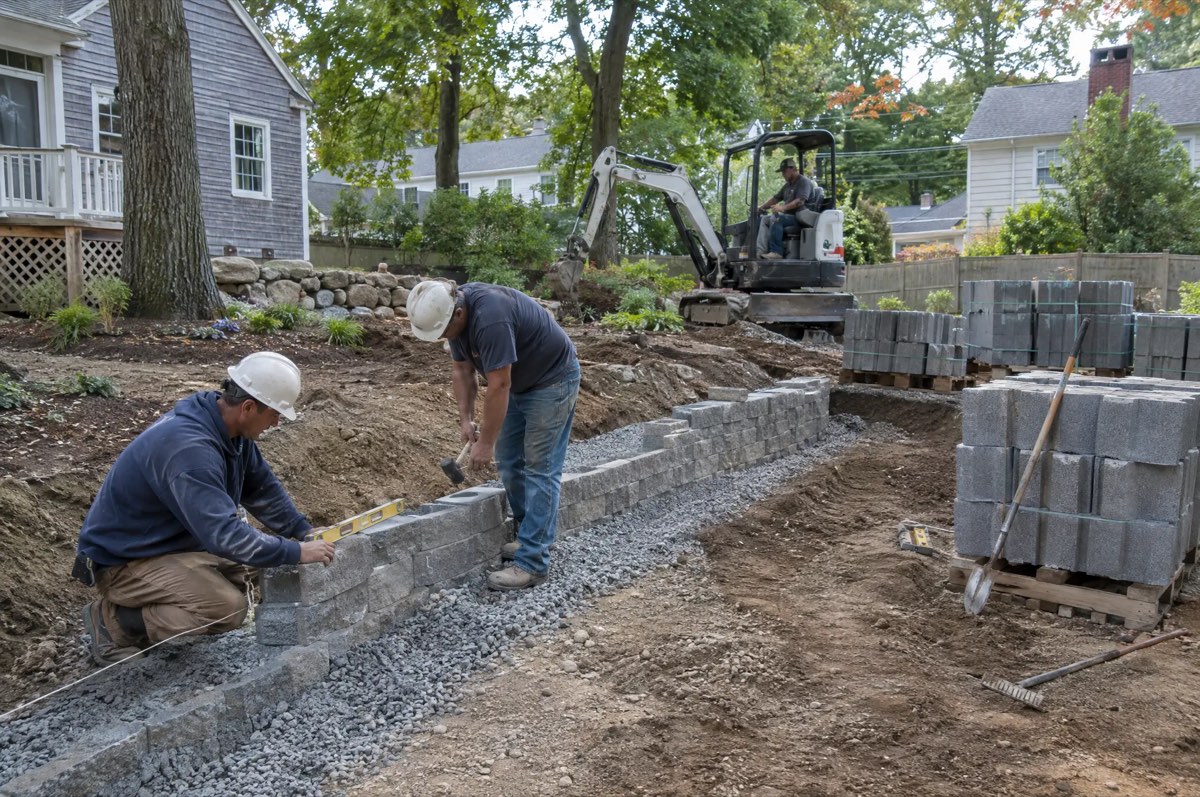
The work starts with layout and excavation. A trench is dug to the depth the wall needs, and the base is a compacted layer of crushed stone set level, since every course above it depends on it. A base that's rushed is the most common reason a new wall leans later.
Block or stone courses go up next, with drain pipe and clean gravel placed behind the wall as it rises. Native soil goes back last, in layers, and the wall gets a cap. Taller walls may need geogrid, a mesh laid back into the soil to anchor the wall.
New England soil freezes and thaws every winter, so the drainage behind the wall matters as much as the wall itself. Ask your contractor where the water goes once it reaches the drain pipe.
Planning Factors That Shape a New Wall
Height and length come first. A wall of a couple of feet is a different build from one that holds back a full yard of soil. Your local building department sets the height where a permit kicks in.
Material changes the look and the lifespan. Natural stone, segmental block, timber, and poured concrete each suit different heights and settings. Timber tends to wear out sooner than stone or block, so it's worth asking how long each option should last.
Buried lines get marked before digging, and 811 handles that request. A wall the machine can't reach costs more labor than one it can, so share any gates, steep drives, or tight corners up front.
Signs it is time to call
- Soil washes onto walkways or patios after heavy rain
- A slope is too steep to mow or use safely
- A planned patio, driveway, or garden bed needs the ground cut or filled
- The low end of the yard stays soggy long after storms
- An existing grade is eroding toward the house or a neighbor's lot
Retaining Wall Installation questions
How tall can a retaining wall be before it needs a permit?
It depends on the town and the wall. Taller walls commonly need a permit, and some need engineered plans. Check with the Taunton building department or ask your contractor how they handle it before work starts.
What's the best material for a retaining wall in Massachusetts?
There isn't one answer. Natural stone and segmental block hold up well through freeze and thaw when the base and drainage are right, while timber wears out sooner. The best pick depends on wall height, soil, and the look you want.
Does a new retaining wall need drainage?
Yes. Water behind a wall adds weight and freezes in winter, which is how many walls fail. Drain pipe and clean gravel behind the wall let that water escape.
Other services
Ready when you are
If you've got a slope or grade change in Taunton that needs a wall, call Taunton Retaining Walls to talk through the site. We'll go over wall height, drainage, and material so you know what the job takes.
Call (508) 209-5020