
Yard Grading and Leveling for Taunton Homes
Water follows the slope of your yard. If the ground along your foundation is flat or tilts toward the house, rain and snowmelt end up against the walls and in any basement or crawl space instead of out in the yard.
Yard grading and leveling reshapes the ground so water moves away from the house and off the property in a controlled way. It also fixes the low spots and sunken areas that hold water and make mowing a chore.
Around many homes in Taunton and nearby towns like Raynham and Norton, the backfill next to the foundation settles over the years. That leaves a dip right where you don't want one. When a yard has a steep drop, a retaining wall may hold the new grade in place.
Signs Your Yard Needs Regrading
Walk the edge of your house after a hard rain. Puddles along the foundation or water running toward the house both mean the grade is off.
Inside, a damp basement wall or a musty crawl space can trace back to the yard. Outside, soil that has sunk next to the foundation leaves a dip where water collects and soaks in.
Ponding in the same place after every storm and ruts left by old work show that the surface has settled. Water that keeps soaking in beside a foundation can lead to damp walls and, in winter, frost heave.
How Grading and Leveling Is Done
The job starts with reading the yard. A contractor looks at where water enters, where it pools, and where it can exit, then measures the fall with a level or string lines.
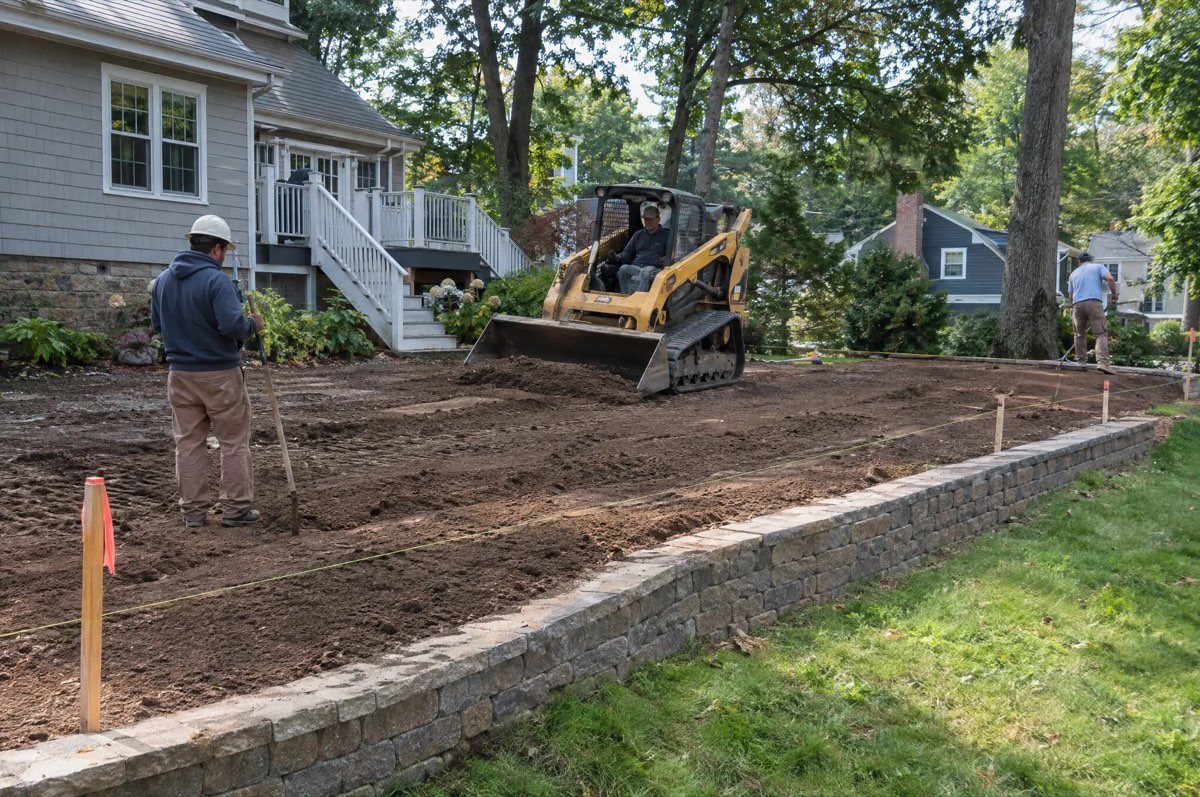
Next comes the earthwork. Old soil is pulled back from the foundation and fill is added to build a slope that drops away from the house. A common rule of thumb is about 6 inches of drop over the first 10 feet, where the lot allows.
Fill is compacted in layers so it doesn't sink again, and the finished surface is raked smooth for seed or sod. Where the lot is flat, a shallow swale or a drain may carry water to a lower corner. On sloped lots, a retaining wall can hold a level area in place.
What Decides the Size of a Grading Job
Yard size and the distance the water has to travel set the baseline. A small correction along one side of a house is a different job from regrading a full back yard.
Moving soil in or out takes machine time and trucking, and the extra has to come from somewhere or go somewhere. Access plays a part too, because a gated yard or tight side path can limit what machines fit.
Trees, septic components if the home has them, utilities, and patios all limit where soil can go, and finishing with new seed or sod adds to the work. Ask your contractor what's included before you agree.
Signs it is time to call
- Puddles along the foundation after rain
- Water running toward the house instead of away from it
- Soil that has sunk in next to the foundation
- Damp basement walls or a musty crawl space
- Low spots that hold water in the same place after every storm
Yard Grading and Leveling questions
How much slope should the ground have next to a house?
A common rule of thumb is about 6 inches of drop over the first 10 feet away from the foundation, where the lot allows. Some lots can't reach that because of driveways or a nearby property line, so a contractor may use a swale or drain to finish the job.
Can grading fix a wet basement?
It can help when surface water is the cause. Water that soaks in along the foundation drops off when the ground slopes away. Basement leaks can also come from gutters or high groundwater, so a contractor may suggest checking those too.
Do I need a retaining wall when I regrade a slope?
Not always. Gentle slopes can be shaped and planted. A steeper drop, or a spot where you want a flat area, may need a wall to hold the soil. A contractor can tell you which fits after looking at the yard.
Other services
Ready when you are
If water is heading toward your house in Taunton, call Taunton Retaining Walls about regrading the yard. Tell us about the slope and the spots that hold water, and we'll talk through your options.
Call (508) 209-5020