
Retaining Wall Drainage Services in Taunton, MA
Water behind a retaining wall is what pushes it over. Wet soil is much heavier than dry soil, and it presses on the wall every season. A wall with no way to release that water will lean or bulge, and the blocks or stone can crack.
Taunton sits in Bristol County, where New England winters bring freezing and thawing and the rest of the year brings regular rain. Water trapped behind a wall in January can freeze and shove the face outward. Retaining wall drainage gives that water a path out so the wall doesn't have to hold it back.
Drainage can be added to a wall that's already standing or built into a new one. Either way, the water moves through clean stone behind the wall and exits at the bottom or the end.
Signs Your Wall Has a Drainage Problem
Check the wall a day or two after heavy rain. If water is still seeping from the face, or the ground at the base is soggy, the water has nowhere to go. White mineral crust and green moss streaks on the face show the same thing building up over time.
A wall that leans forward or has gaps opening between blocks is taking more pressure than it was built for. Standing water behind the wall or soil washing out at the ends points to the same cause.
Once a wall has shifted, drainage alone may not be enough, and a repair can turn into a partial rebuild.
What a Drainage Job Involves
A good contractor starts by finding where the water comes from and where it can go. That means checking the slope above the wall and any downspouts or driveways that send runoff toward it. It also means finding a place for the water to exit at the low end.
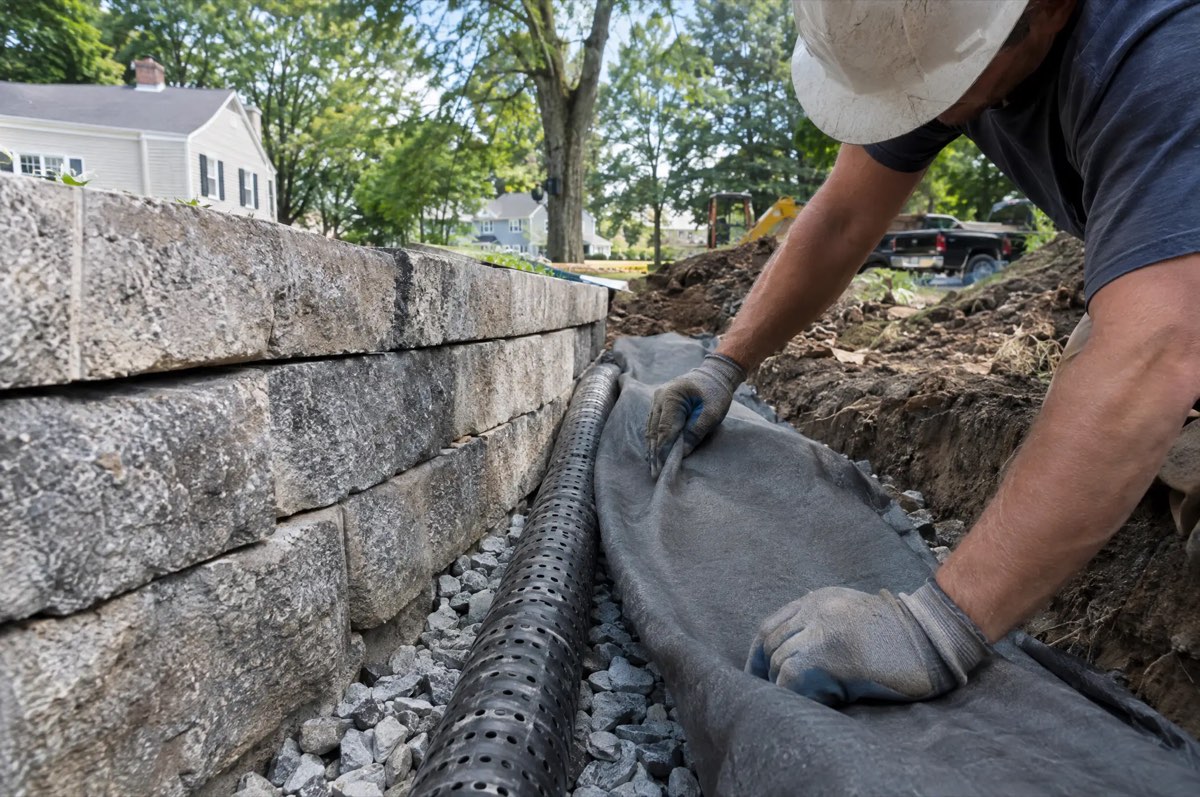
On an existing wall, the crew may dig down behind it and lay perforated drain pipe at the base. They then backfill with clean crushed stone, wrapped in filter fabric so soil doesn't clog it. The pipe is sloped so water runs out to daylight or into a suitable outlet.
Where digging behind the wall isn't practical, other fixes exist. Weep holes can be cut or cleared through the face of the wall, and a surface drain or shallow swale can catch water above the wall before it arrives. A good provider will explain why they picked one approach over another.
What Shapes a Drainage Repair
Wall height and length come first. A taller wall holds back more soil and needs more stone behind it. Access matters as well, since a wall tucked behind a house where machines can't fit means more hand digging.
If water can drain by gravity to a lower spot on the property, the job is simpler. If the yard is flat or the low end is boxed in, the contractor may need a longer pipe run or a different exit.
If the wall has already moved, the contractor may need to reset or rebuild part of it while the backfill is open. Ask for that to be spelled out before work begins, so you know which part is drainage and which part is wall repair.
Signs it is time to call
- Water seeping from the wall face days after rain
- Soggy ground or standing water at the base of the wall
- White crust or moss streaks on the wall face
- A wall that leans forward or bulges in the middle
- Soil washing out at the ends of the wall
Retaining Wall Drainage questions
Can drainage be added to a wall that's already built?
Yes, in many cases. A contractor can dig behind the wall and add pipe and stone, or cut weep holes through the face. If the wall has already shifted a lot, it may need repair or rebuilding first.
Do I need weep holes if the wall has a drain pipe?
It depends on how the wall is built. Pipe at the base carries water out the end or to an outlet, and weep holes give a second exit through the face. Ask your contractor which setup suits your wall.
How do I know if drainage is the problem or the wall itself is failing?
Both can be present at once. Wet soil and seeping water point to drainage, while leaning or cracking points to the wall. A contractor can look at both and tell you whether drainage alone will help.
Other services
Ready when you are
If water is collecting behind your retaining wall in Taunton, give Taunton Retaining Walls a call. Describe what you're seeing and we'll talk through the drainage fix that fits.
Call (508) 209-5020